Unlimited Creative Freedom: Why 3D Visuals Beat Traditional Photoshoots
A traditional product photoshoot is a logistical exercise as much as a creative one. You book a studio. You arrange transport for the products — sometimes across the country, sometimes across the continent. You hire a set designer, a photographer, a stylist. You build the scene, light it, shoot it, and hope the result matches what you imagined when you briefed the concept three weeks ago. If it doesn't, you either settle or you do it again.
The result is a fixed set of images. Beautiful, often. But fixed. One environment. One configuration. One moment in time.
3D visualization works differently. And once manufacturers understand what that difference actually means in practice, the conversation about whether to digitize their products tends to change quite quickly.

.jpg)
✍️ Key takeaways
📌 One digital asset, infinite environments. 3D visualization frees manufacturers from the physical and logistical constraints of traditional photography — the same product can be shown in any setting, any configuration, and any lighting condition without additional production cost.
📌 Variations and updates become trivial. Colorways, new finishes, and collection updates can be visualized in full lifestyle context with a material swap rather than a reshoot — making it practical to show an entire range, not just the hero products.
📌 The economics compound over time. Unlike a photoshoot, a properly digitized product asset is a reusable resource. Every new campaign, every new market, every new application draws from the same asset at marginal cost.
The Scene Is Yours to Design
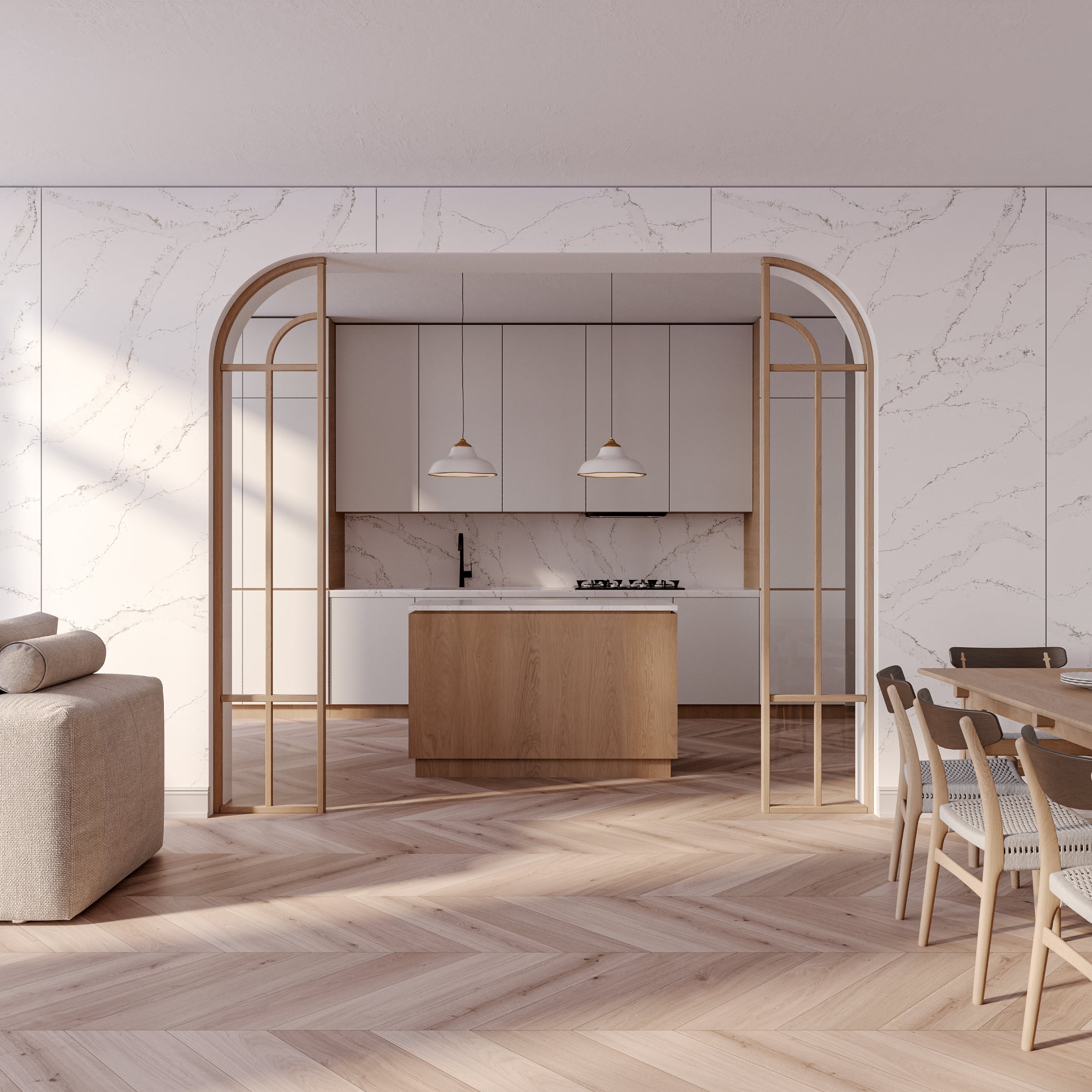
In a traditional photoshoot, the environment you can create is bounded by budget, by physical reality, and by the logistics of getting your product to the location. A flooring manufacturer who wants to show their product in a sunlit Scandinavian interior, a moody Japanese tea room, and a contemporary New York loft needs three separate shoots, three separate sets, three separate budgets.
In 3D, those are three scene files.
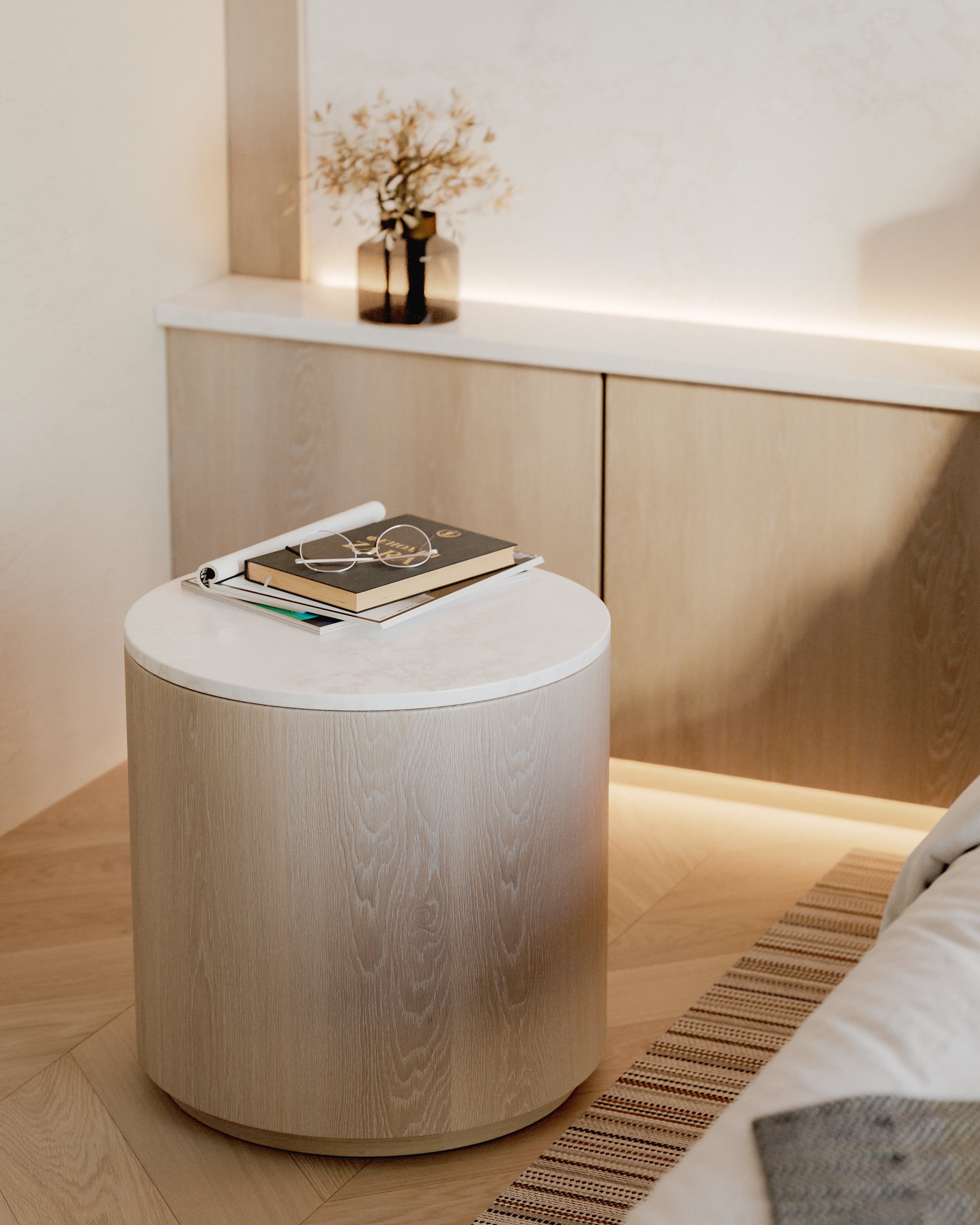
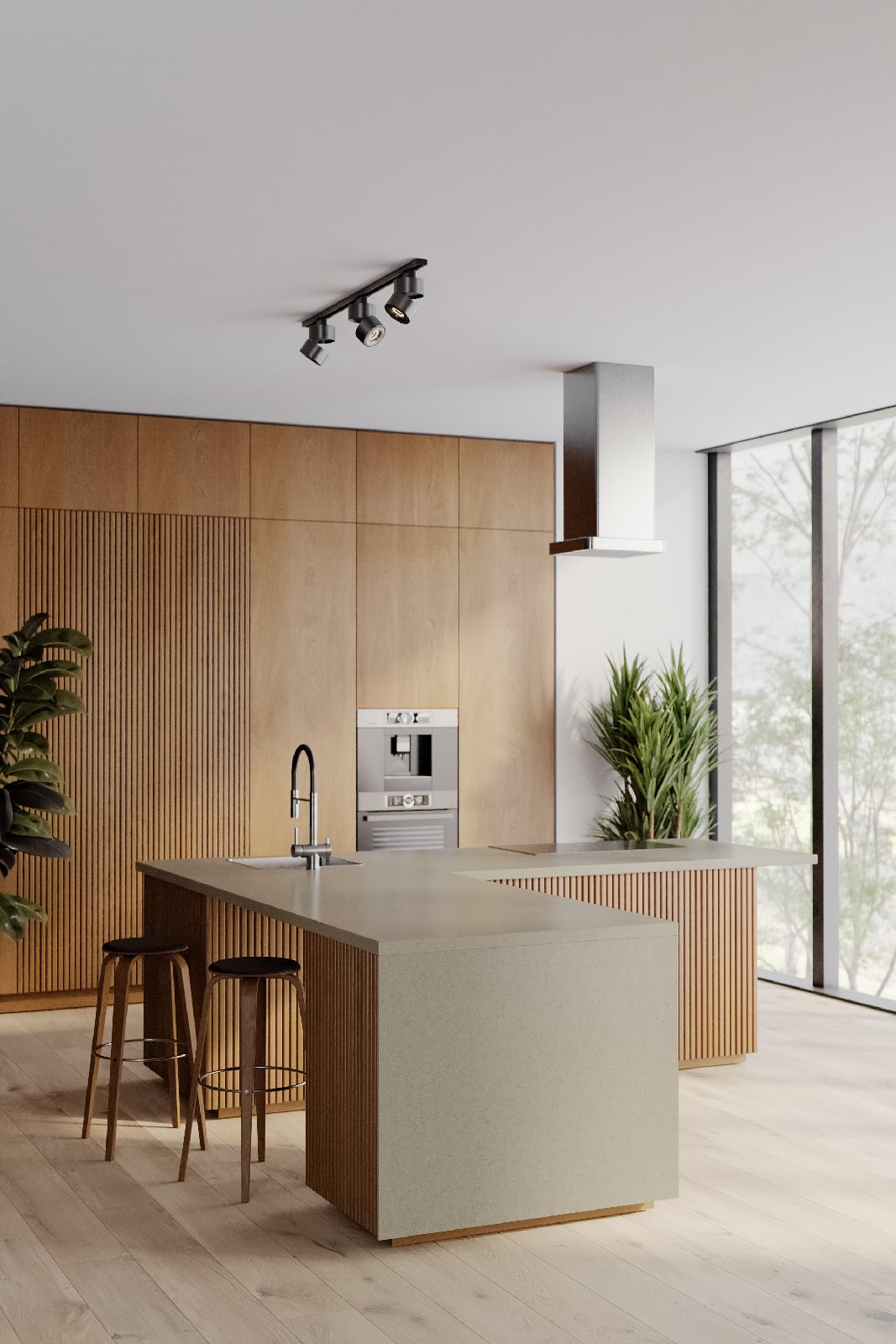
The environment is not a constraint — it is a creative variable. Want to show your upholstery fabric on a curved sofa in a warm residential living room? Done. The same fabric on a modular seating arrangement in a corporate lobby? Switch the scene. On a statement armchair in a brutalist concrete space with dramatic directional light? That's an afternoon's work, not a production week.
This is not a minor convenience. For manufacturers whose products live across multiple market segments — residential, contract, hospitality, retail — the ability to show the same product in contextually relevant environments for each audience is genuinely transformative. You are no longer choosing one story to tell. You can tell all of them.
Placing Products Where Physics Won't Allow
Traditional photography is anchored to what physically exists and what you can physically reach. Getting your product into a specificreal-world location — a landmark building, a dramatic landscape, anarchitecturally significant interior — means negotiating access, handlingtransport, and dealing with everything that can go wrong when you are operatingon someone else's premises on a fixed timeline.
3D removes that anchor entirely.
A lighting manufacturer can show their fixture suspended above a dining table in a Moroccan riad, in a glass-walled mountain retreat, orin a minimalist gallery space — all in the same campaign, all without leaving the studio. A tile manufacturer can place their product on the floor of a space that doesn't exist yet, in a color palette that matches a client brief, inlighting conditions that mirror a specific time of day.
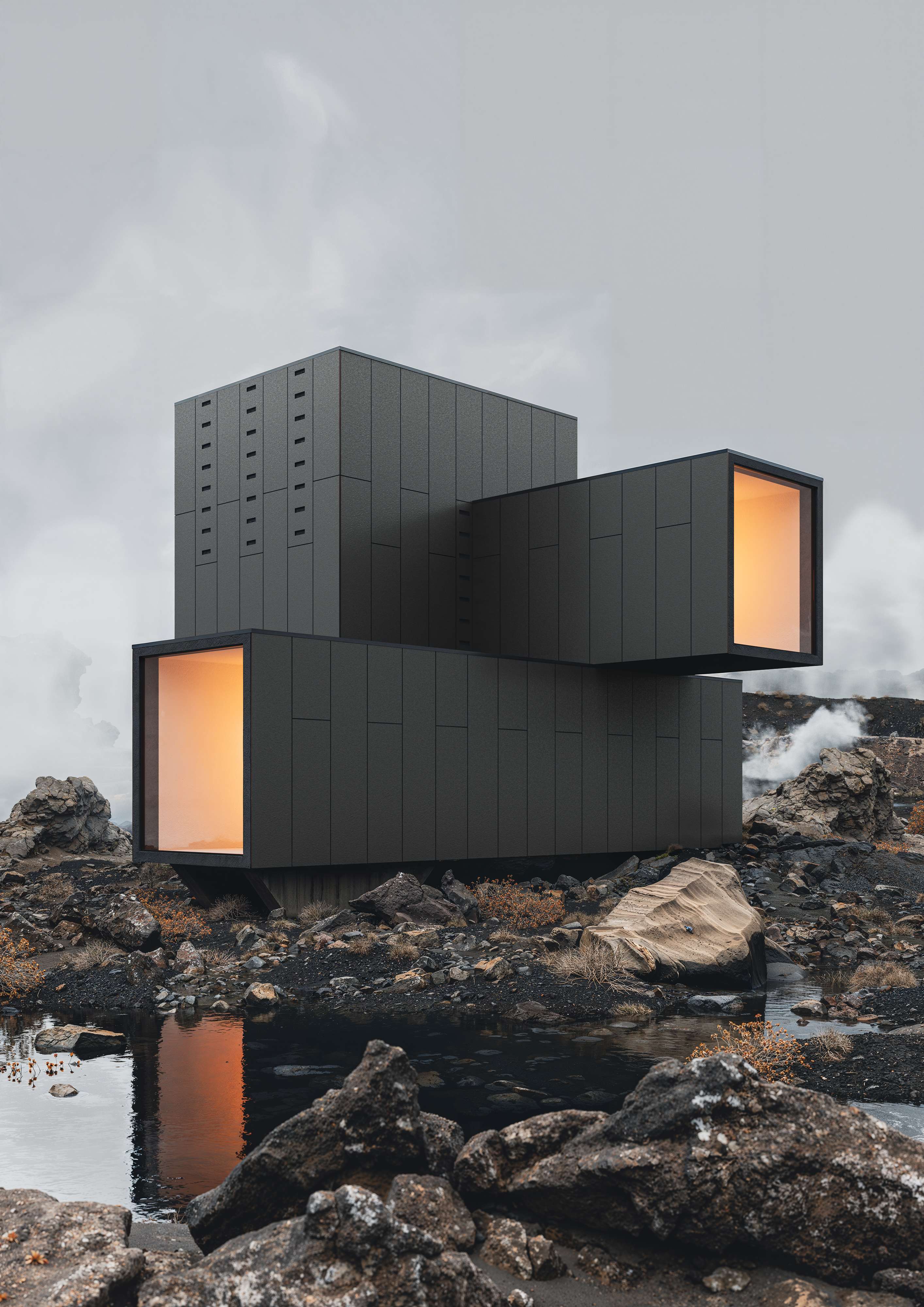
You can go further. Some of the most striking product visuals being produced right now place products in environments that are deliberately, beautifully impossible — architectural spaces that defy gravity, landscapes that blend the natural and the imagined, scenes that signal a brand's creative ambition rather than simply documenting a product's appearance. This is territory traditional photography can only reach with enormous production budgets. In 3D, it is a matter of creative decision-making.

Fabric on Any Furniture. Finish on Any Form.
One of the more practical — and underused — applications of 3D visualization is the ability to apply surface products to geometry that the manufacturer doesn't own or stock.
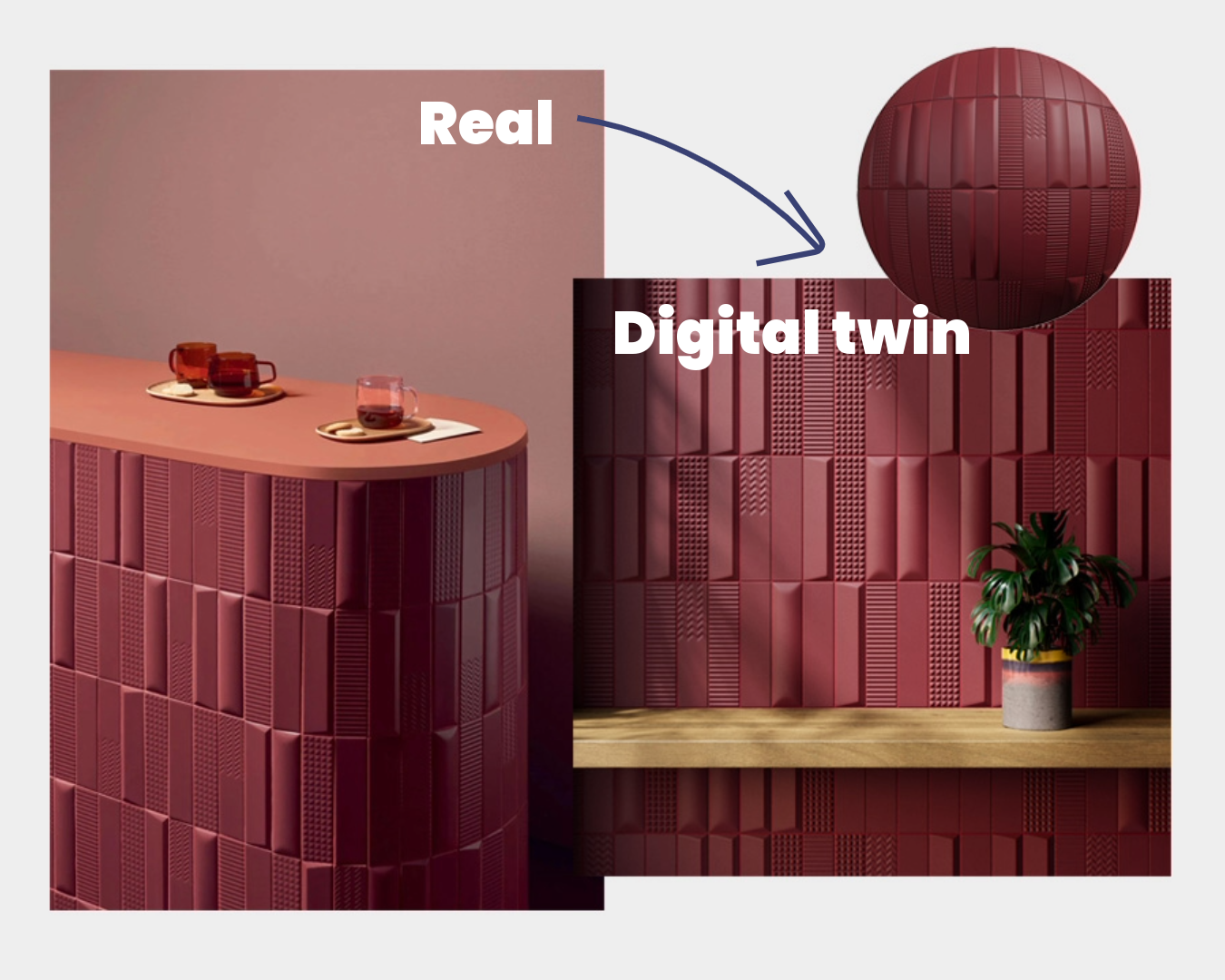
An upholstery fabric manufacturer, for example, does not need to physically reupholster multiple pieces of furniture to show how their fabric performs across different silhouettes. In 3D, the fabric is applied digitally to whichever forms serve the visual. The drape, the texture, the way the weave catches light — all of it is rendered from the actual digital twin of the material. The result is accurate and visually compelling without a single meter of fabric being physically cut and fitted.

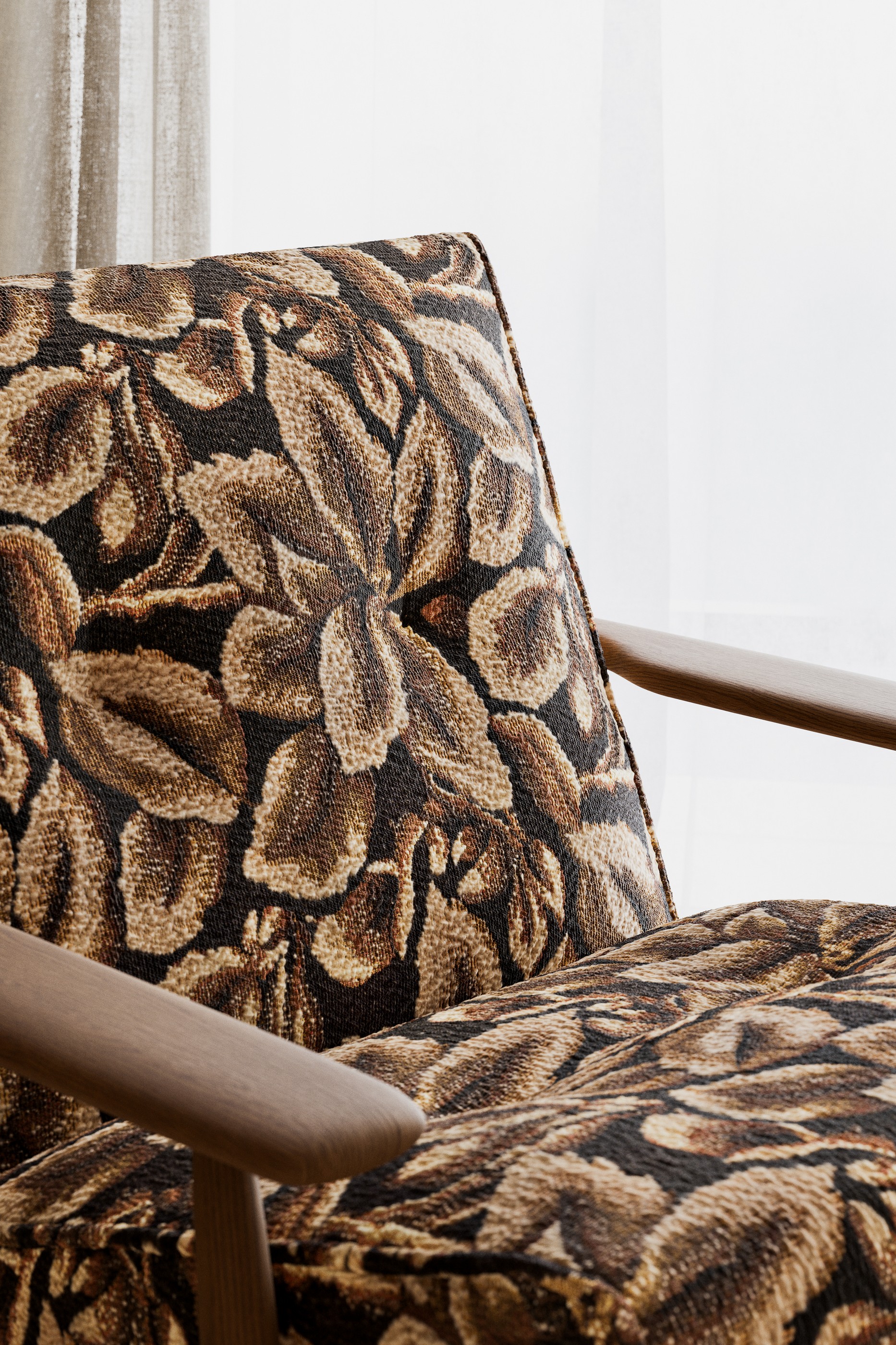
The same logic applies to wallcoverings shown across different room architectures, to flooring seen in spaces of wildly different proportions, to surface materials rendered on product forms that don't even exist in the manufacturer's own range. The digital asset is flexible in a way the physical product cannot be.
Variations Without Reshoots
Product lines have colorways. Finishes come in multiple options. Collections get updated.
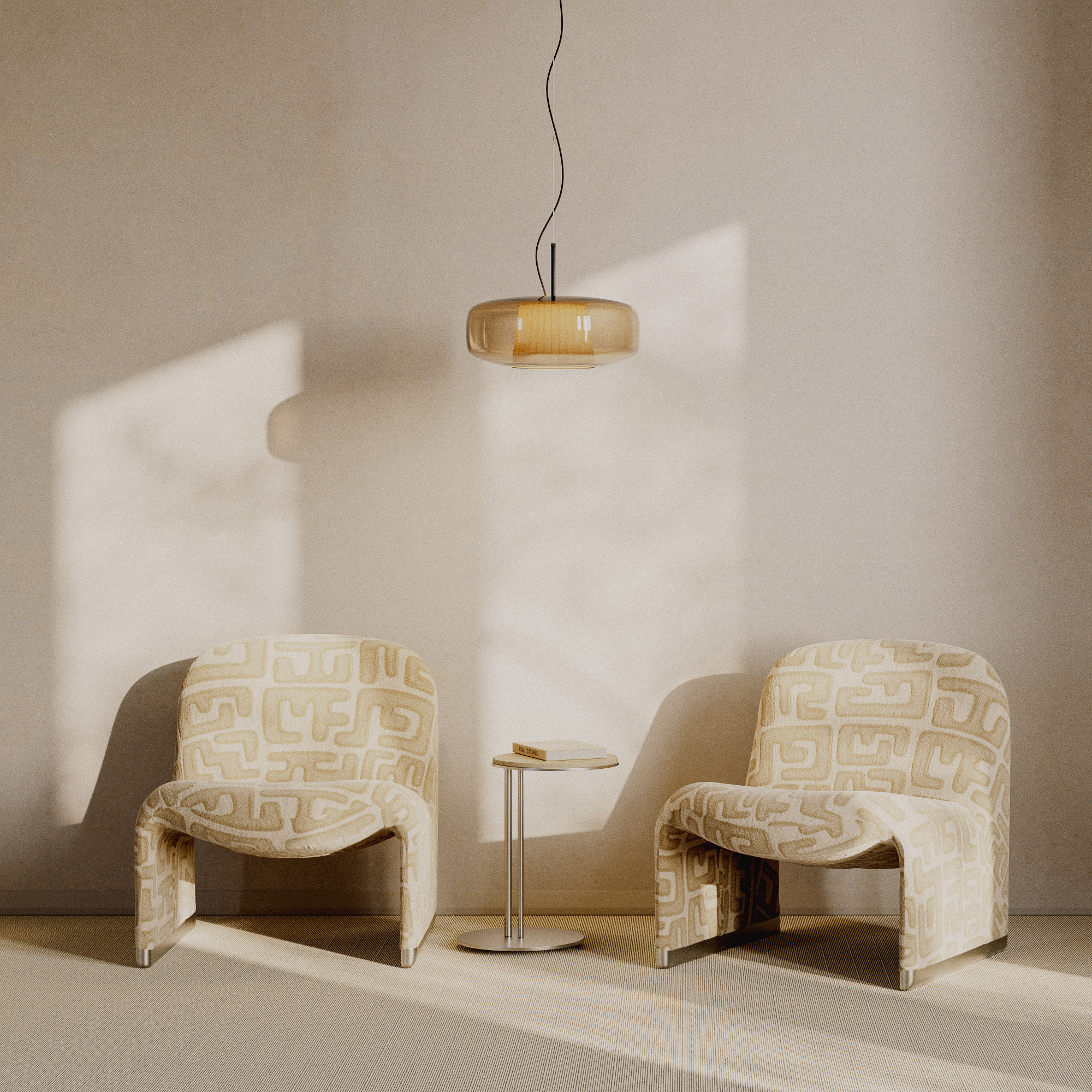
In traditional photography, each variation is a separate shoot or at minimum a separate setup within a shoot. The costs multiply. The timeline extends. The practical result is that manufacturers often show only their hero colorways in lifestyle imagery, leaving the rest of the range documented only in flat technical swatches that do nothing to communicate how the product actually looks in a real environment.
In 3D, a color variation is a material swap. The scene, the lighting, the composition, the camera angle — all of it stays exactly as it was. Only the product changes. This means a full colorway range can be shown in full lifestyle context at a fraction of the cost of reshooting, and updated the moment a new finish is added to the collection.
For manufacturers with broad ranges or frequent collection updates, this is not a small efficiency gain. It fundamentally changes what is possible within a reasonable marketing budget.


The Cost Conversation
None of this means 3D visualization is free, or that it is always the right tool for every application. Physical photography still has strengths — particularly for close-up tactile detail where haptic realism matters, and for brand contexts where the authenticity of a real environment carries specific meaning.
But the cost comparison, done honestly, favors 3D in most scenarios that involve multiple environments, multiple configurations, or ongoing range updates. A photoshoot is a one-time production event with a fixed output. A digital asset is a reusable resource that continues to generate new visual material every time a scene is adjusted, a colorway is swapped, or a new campaign brief demands a different context.
The upfront investment in digitizing a product properly pays returns across every piece of visual communication that product ever needs — not just the first campaign, but the next one, and the one after that.
👉 Real World Textures creates professional digital twins of physical products — PBR materials and fully prepared 3D models as well as high-end visualizations for marketing campaigns. See how your products can look in 3D.
Join our community and stay updated on all things 3D
Sign up to our newsletter.


Build a better world with real-world 3D detail
Step into the digital world and explore new ways to create, present, and distribute products — without limits or physical constraints.