How Digital Assets Are Used in the Real World
You've heard the term "digital twin" more than once in the past few years. Maybe it came up at a trade fair, in a conversation with an architect, or buried in a supplier's email. It sounds technical. Abstract. Like something that matters more to software developers than to companies that make floors, fabrics, wall coverings, furniture, lighting, or decorative objects.
It isn't.
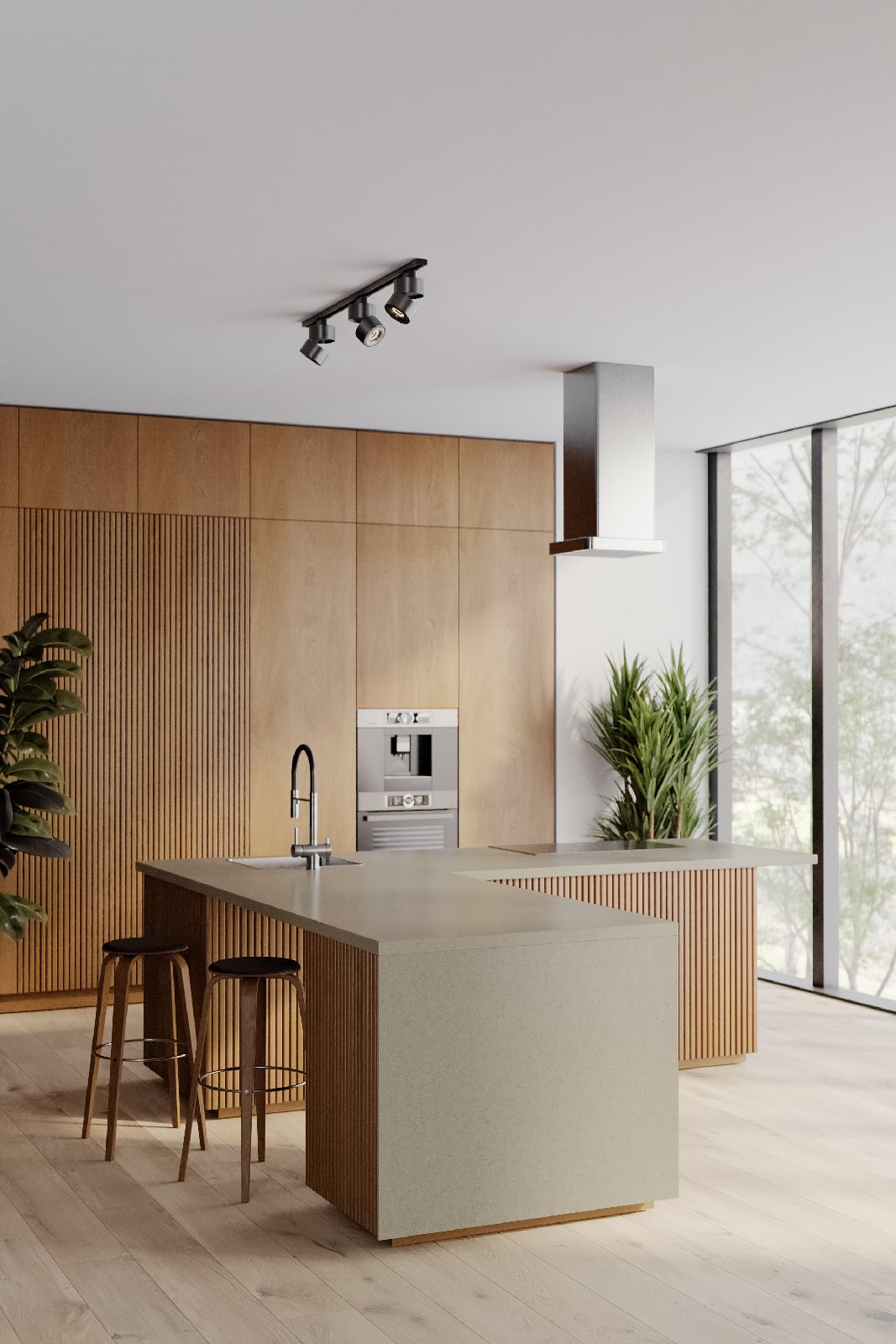
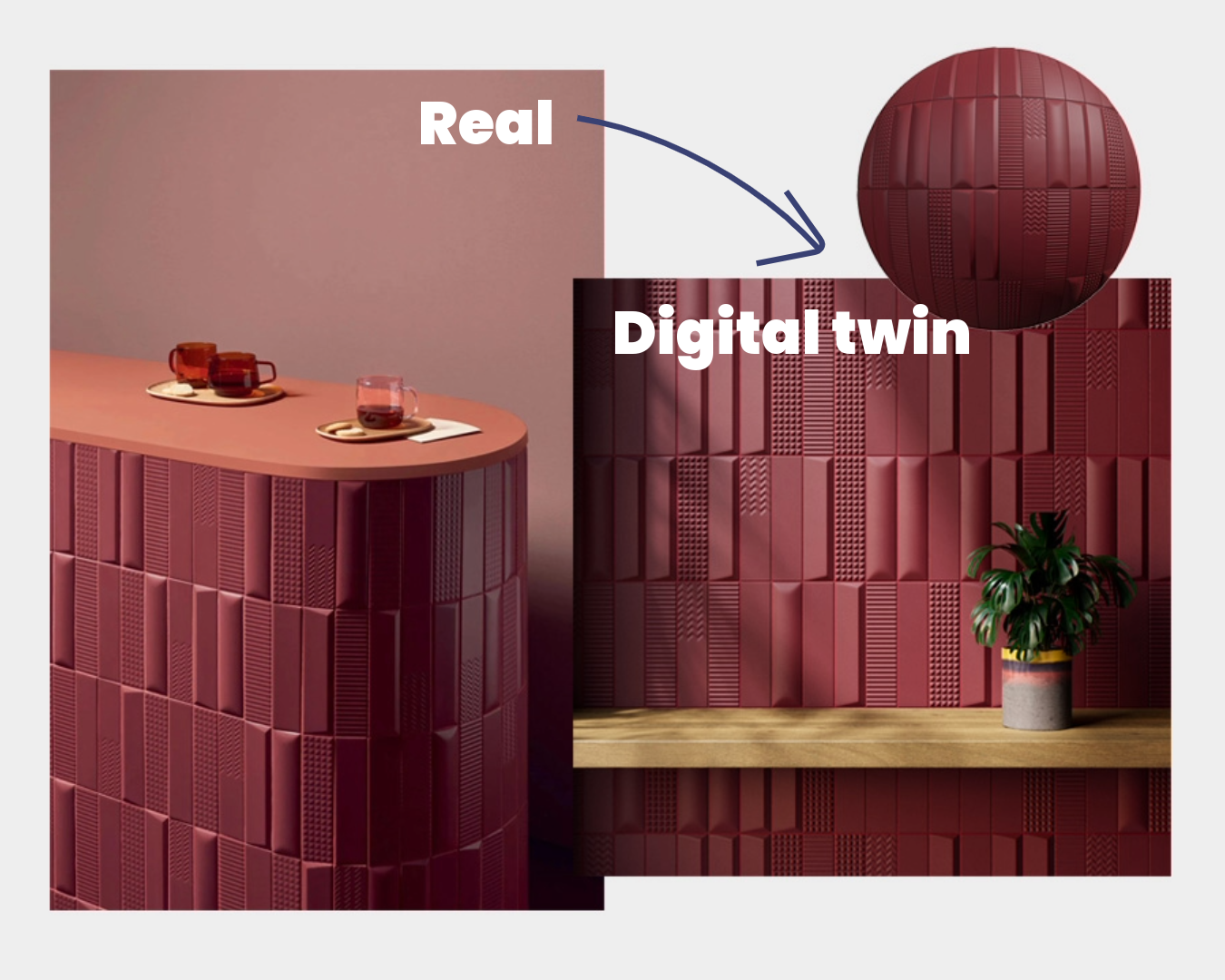
Digital assets — precise digital replicas of your physical products — are quietly reshaping how architects design, how projects get specified, and ultimately which manufacturers get chosen. A digital asset might be a PBR texture set that captures the exact surface character of your flooring. Or a fully modeled 3D object — your chair, your pendant light, your cabinet — ready to be placed in an architect's scene. The category is broad. The outcome is the same: your product is present at the moment design decisions are made. Here's exactly how that works in practice.

The Moment That Actually Matters
An architect is working on a hospitality project. A 40-room boutique hotel. The client wants warm, natural materials — something tactile, honest, grounded. The architect opens their 3D software and starts building thespace. They need a floor. A wall surface. A sofa for the lobby. A pendant light above the bar.
They have two options.
They can search a generic asset library and download "wood texture #4837" and a nameless lounge chair that vaguely matches the brief — files that look the part but carry no product information and have no connection to anything that can actually be ordered. The render gets presented to the client with a disclaimer: "Materials and products shown are illustrative only." The client approves the concept. Then the real work begins: weeks of hunting for products that actually match what they showed.

Or — if your products are in a library like Reawote — the architect downloads your specific floor covering, your sofa, your pendant. Your product names. Your finishes. Your dimensions. They place them in the render, and the client sees exactly what will be installed. Every item is identified. Every link leads back to you.
That second scenario only happens if your product exists as a digital asset.
Where Digital Assets Actually Live
It's worth being specific about the environments where your digital products end up being used, because manufacturers sometimes picture this as a niche technical workflow. It isn't.
3D design software is the primary workspace for virtually every architect and interior designer working on commercial projects today. SketchUp, Blender, 3ds Max, Cinema 4D, Revit, Archicad etc.— these are the tools professionals use daily. Surfaces get applied to walls and floors. Furniture gets placed in rooms. Lighting gets hung from ceilings. All of it happens inside these environments. If your product isn't available as aproperly prepared digital asset compatible with these tools, it simply isn't in the room when design decisions are made.
Visualization and presentation is where clients see the project for the first time. A render is not a sketch — it is a high-fidelity simulation of a finished space. Clients make real decisions based on what they see. Budgets get allocated. Products get approved or rejected. The material shown in the render is frequently the material that ends up in the order.

Specification documents increasingly reference products directly from render data. When an architect uses a real product digital asset, the product information travels with the file. Product name, manufacturer, technical specifications, and sourcing information are all attached. This shortens the gap between design approval and purchase order.
Collaborative workflows extend this further. A render gets shared with a project team, a client, a contractor. Everyone is looking at your product — named, identified, sourced — without any of them having to makea separate phone call to find out what it is.
Why This Changes the Specification Game
Traditional marketing to architects has always faced the same problem: you can get your sample book into a showroom, send it to a studio, exhibit at trade fairs. But none of that puts your product into the architect's active project at the moment they are making material decisions. That moment happens in 3D software, late on a Tuesday, when no sales rep is present.
A digital asset does.
When your product exists in a professional library with proper integrations — meaning an architect can find it, preview it in context, and import it into their scene without interrupting their workflow — you are present at exactly that moment. You are not competing for attention in a physical folder of samples. You are the material they are already using.
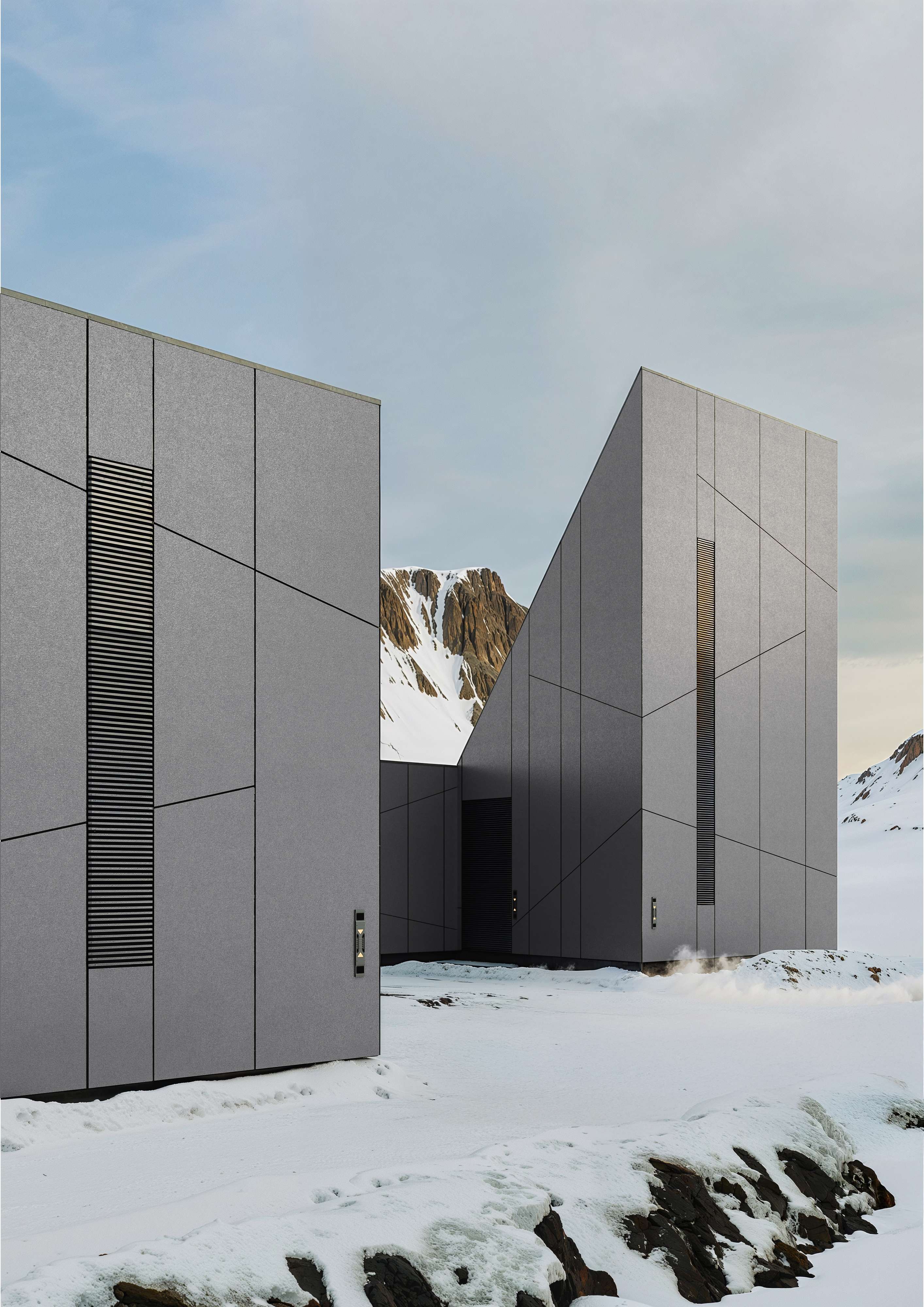
This is what manufacturers who have digitized their products have discovered: the download metric is not a vanity number. Each download isan architect who has placed your product in a real project. Some of those projects lead to bulk orders. Commercial flooring for a hotel lobby. Lounge seating for a restaurant fit-out. Lighting fixtures across a corporate headquarters. Wall cladding for a residential development. These are not retail quantities.
What "Properly Digitized" Actually Means
Not all digital assets are equal, and the difference matters more than most manufacturers expect.
For surface products — flooring, fabric, wallcovering, stone, tile — a proper digital asset means a seamless PBR txture set: a collection of maps that together capture how your material actually behaves under light. The color, the surface grain and depth, the way it reflects or absorbs, the physical texture variation. A photo of your product is not this. A low-resolution scan from ten years ago is not this. What an architect needs is a file that makes their render look the way your product looks in a real room — because that is what they are presenting to a client.
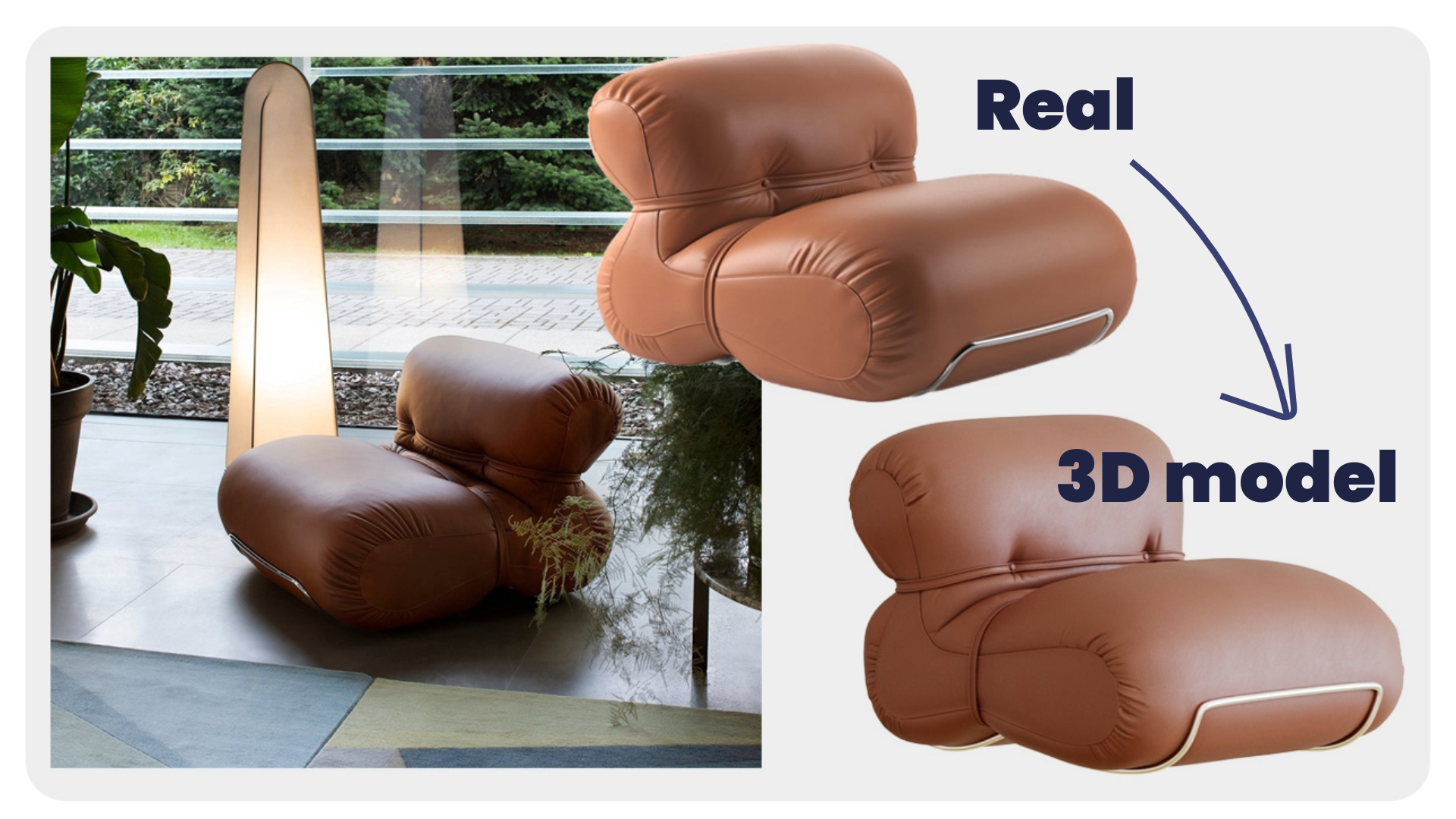
For furniture, lighting, and decorative objects, the equivalent is a properly built 3D model — accurate geometry, correct dimensions, realistic material finishes applied to every surface. A model thatis too low in polygon detail looks wrong at close range. One that isn't prepared for multiple render engines creates extra work for the architect andgets abandoned. Proper preparation means the model works in SketchUp, Blender, 3ds Max, and the other tools architects actually use — without the architect having to rebuild it.
In both cases, the standard has risen considerably in recent years, in direct proportion to how realistic professional rendering has become. An architect whose render looks photorealistic except for one product that looks flat or wrong will simply replace that product with something that works. Fidelity is not a bonus feature — it is the baseline for being used at all.
👉 Digital assets are not a future-facing investment in someabstract digital strategy. They are a direct channel into the active projectworkflow of the specifiers who determine what gets built and what gets ordered.
👉 Your product either exists in that workflow or it doesn't.
👉 The architects who are specifying real projects right noware working in 3D software right now. The products they are using — on theirfloors, walls, and in their spaces — are the ones that were available when theyneeded them.
Real World Textures digitizes physical products formanufacturers — from materials and surfaces to furniture and objects —delivering them into the Reawote library, where architects and designersdownload real products directly into their 3D workflows. If you want yourproducts to be present at the moment design decisions are made, get in touch.
.jpg)
Related posts

Join our community and stay updated on all things 3D
Sign up to our newsletter.


Build a better world with real-world 3D detail
Step into the digital world and explore new ways to create, present, and distribute products — without limits or physical constraints.