Sustainability Through Digital Twins
Sustainability has become a word that gets attached to almost everything in manufacturing. New materials, new production processes, new packaging. Most of it is legitimate. Some of it is noise. But there is one genuinely significant shift happening in how manufacturers present and distribute their products that rarely gets talked about in sustainability terms — even though it probably should.
The printed catalog is dying. And not a moment too soon.


✍️ Key takeaways
📌 Why catalogs are no longer the "go to" tool for architects when specifying products for projects
📌 Digital alternatives and their cost effectiveness
📌 Sustainability as a co-benefit for manufacturers competing to be speficied for projects
The Catalog Problem Nobody Talks About
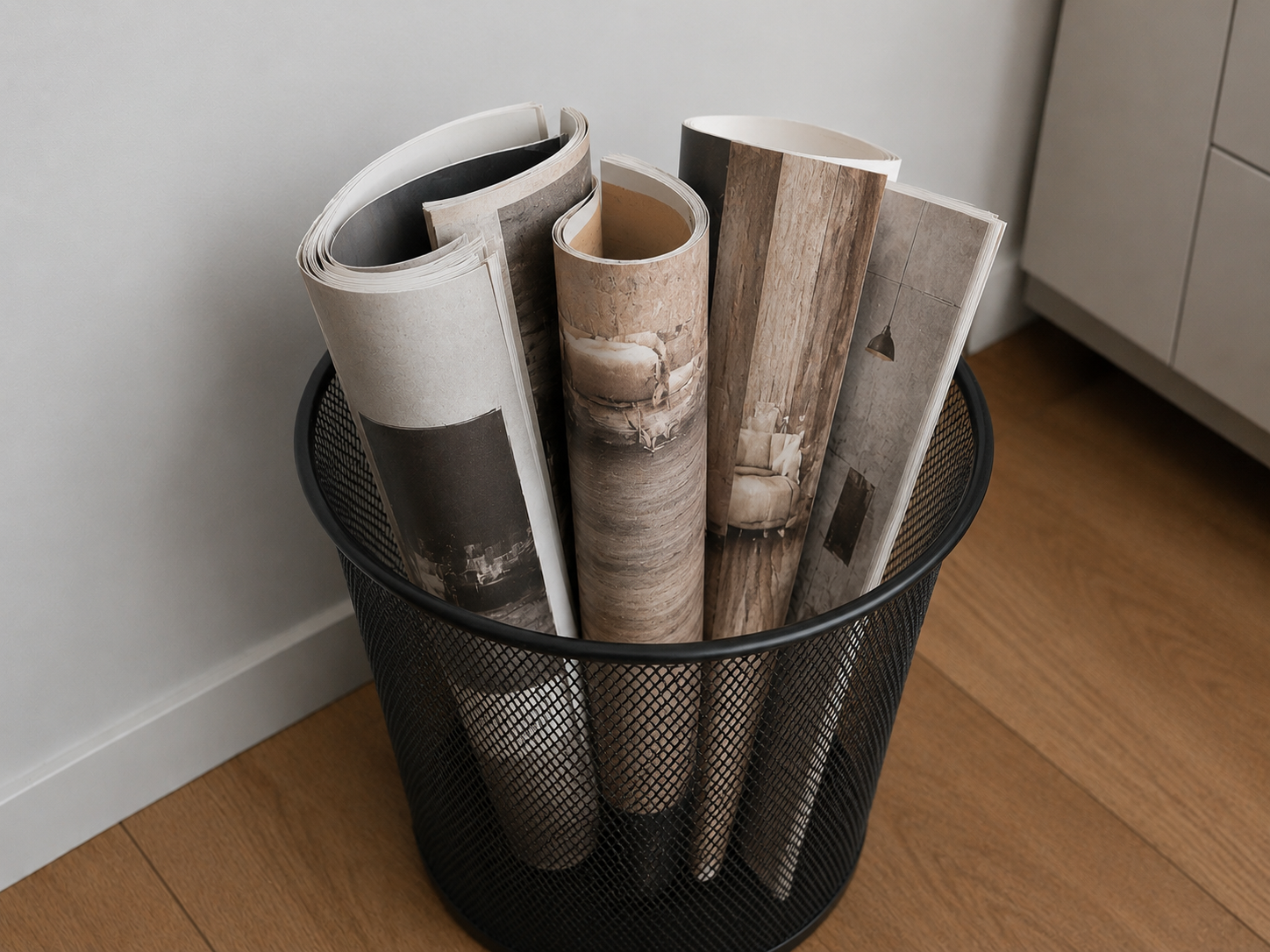
Every year, manufacturers across the flooring, textile, furniture, and surface industries print tens of thousands of catalogs. Heavy, beautifully designed, expensive to produce. They get shipped to architecture studios, interior design firms, showrooms, and trade fair stands around the world.
And then, within months, most of them end up in a recycling bin. Or worse.
This isn't cynicism — it's the honest reality of how physical marketing material moves through a professional design studio. A catalog arrives. It gets flipped through, maybe used once as a reference, and then shelved. A new collection comes out. The old catalog is outdated. A studio moves office. The shelves get cleared. Print runs are large because unit cost drops with volume, so manufacturers over-order. The surplus goes straight from the warehouse to waste.
The environmental cost of this cycle — paper, printing, ink, transport, disposal — is real and largely invisible in sustainability reporting, because it sits in the marketing budget rather than the production line.
What Digital Twins Replace
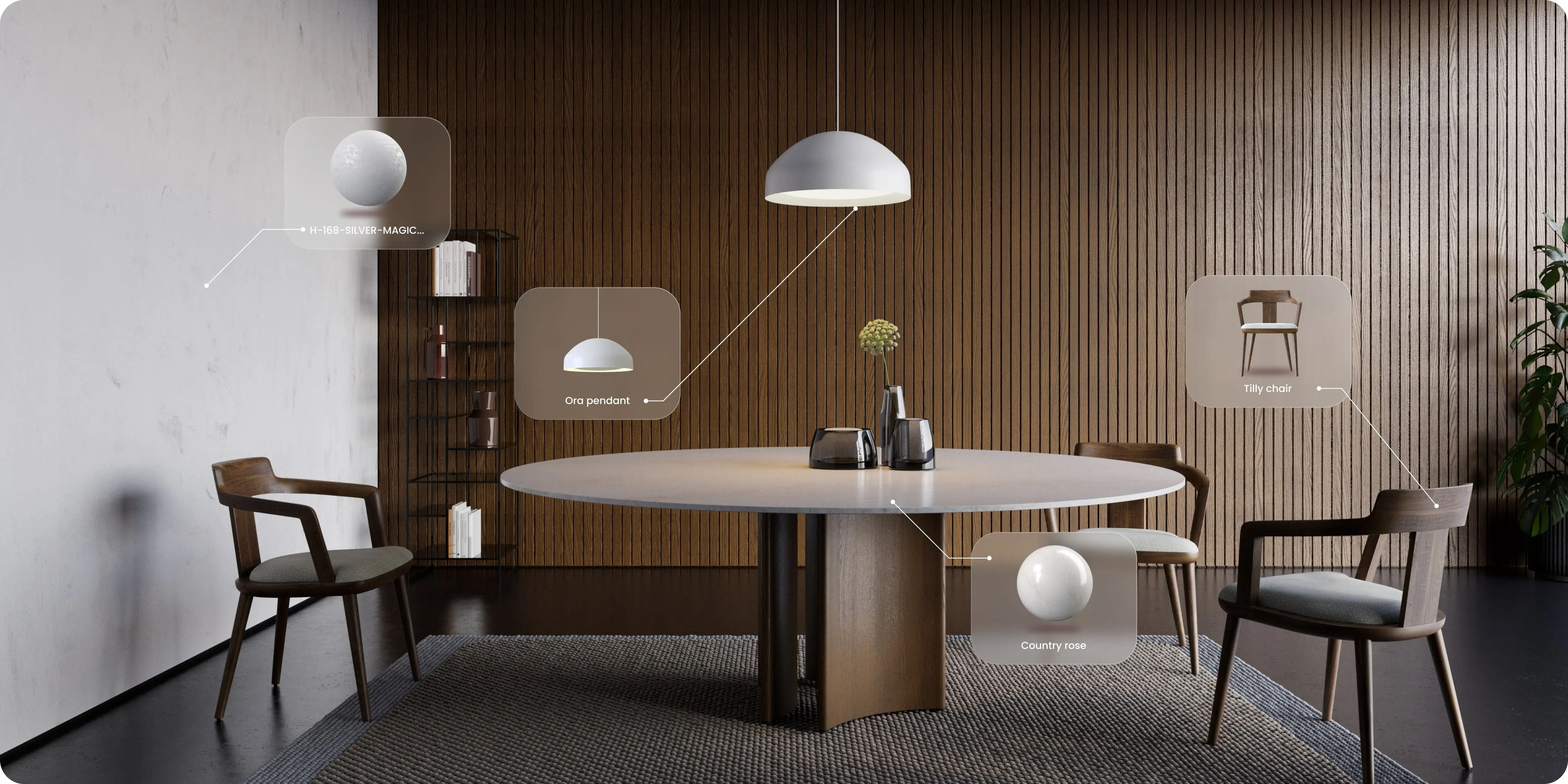
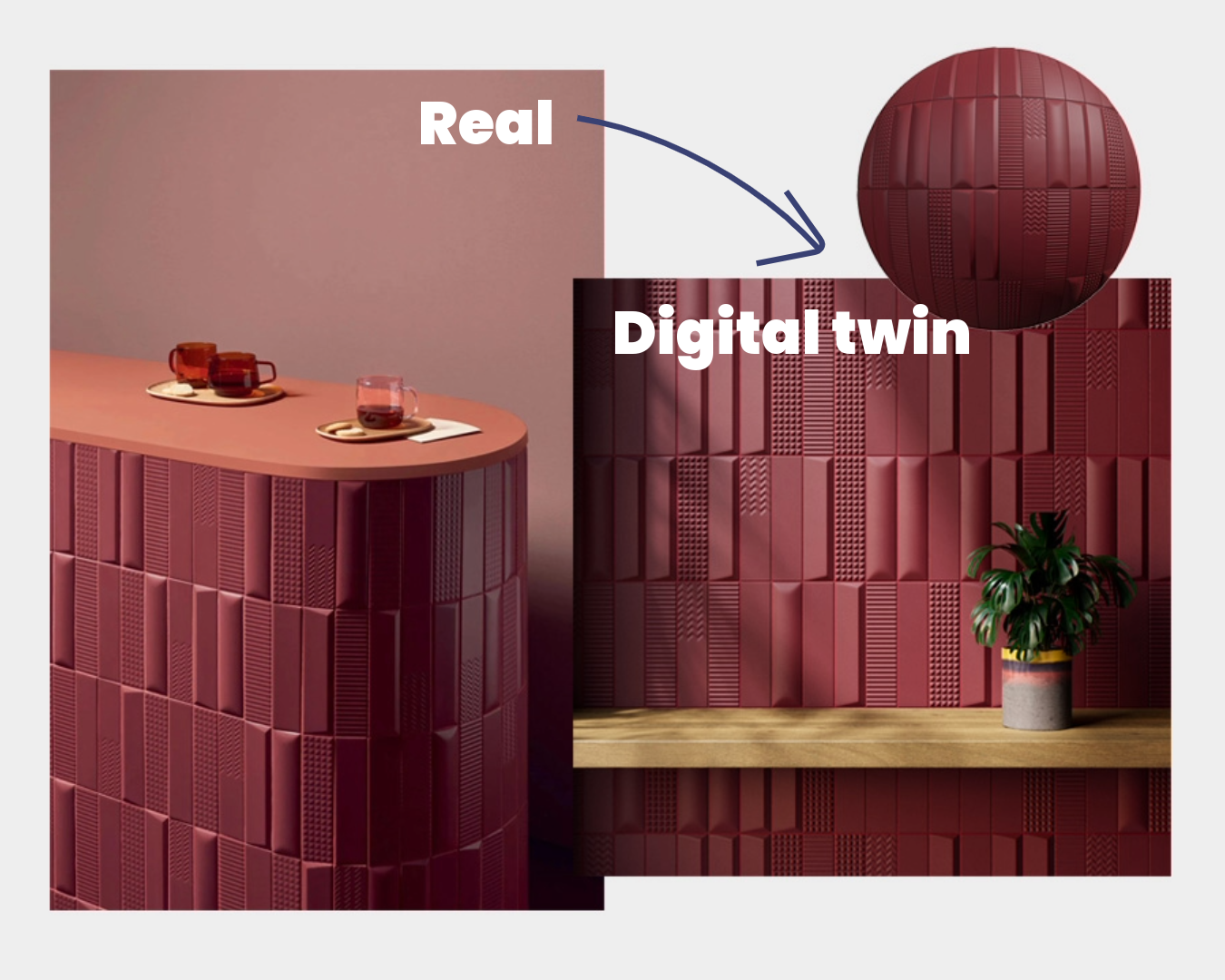
A digital twin of your product — a properly prepared PBR texture or a precise 3D model — does everything a catalog page does, and several things a catalog page cannot.
It shows the product accurately. A high-quality digital asset rendered in a real scene context gives an architect a better sense of how your flooring looks in a hotel lobby or how your fabric reads under warm light than a flat printed image on a catalog page ever could. The render is dynamic. The catalog is static.
It travels without weight. A digital asset library accessible from any browser or directly inside a 3D software plugin reaches every architect in every market simultaneously. No shipping. No import duties. No lead time waiting for a box of catalogs to arrive at a trade fair stand in a different country.
It stays current. When you update a finish, add a colorway, or discontinue a product, the change happens in the library. There is no stack of outdated catalogs to dispose of and no reprint to commission. The version architects are working with is always the current one.
It doesn't end up in the bin. A digital asset that an architect downloads and uses in a project is, by definition, a marketing tool that reached its target. The physical catalog that got shelved and binned never did.
The Business Case Runs Parallel to the Environmental One
It would be convenient if sustainability and commercial interest always aligned perfectly. They do not always — but in this case, they largely do.
Print catalogs are expensive. A well-produced catalog for a mid-sized manufacturer — including design, photography, printing, and distribution — can represent a significant annual marketing spend. That budget often goes into broad, untargeted distribution. Catalogs are sent to studios whether they are relevant prospects or not, to markets where the manufacturer may not even sell, and to contacts who requested them once but have since moved on.
Digital asset distribution is targeted by nature. Architects who download your product from a professional library are already actively looking for something like your product. They found it, selected it, and chose to use it. The download is a qualified interaction. The catalog drop is not.
This does not mean catalogs disappear overnight, and it does not mean physical samples become irrelevant. They do not. An architect who likes your product in a render will often still want to hold the physical sample before specifying it. That tactile step still matters.
But the catalog as the primary marketing vehicle for reaching architects at scale is already being replaced. The replacement is more effective, less wasteful, and less expensive to maintain.
Sustainability That Shows Up in the Work
There's a secondary sustainability dimension worth naming here, one that sits on the architect's side rather than the manufacturer's.
When an architect designs with real product digital twins — rather than generic placeholder textures — the specification process becomes significantly more accurate. Fewer material substitutions happen late in a project. Fewer samples get ordered, tested, rejected, and discarded. The gap between the designed intent and the finished build narrows. Less waste is generated in the procurement and specification phase because the decisions being made are better informed from the start.
For manufacturers, this means a higher conversion rate from specification to order. For the project, it means fewer costly late-stage changes. For the environment, it means less of the logistical churn that comes from imprecise specification — shipping samples back and forth, replacing materials mid-build, over-ordering to account for uncertainty.
Digital twins don't just reduce the waste in how products are marketed. They reduce the waste in how projects get built.
A Shift Worth Making Deliberately
Most manufacturers who move toward digital asset distribution do so for competitive reasons first — because architects are increasingly selecting products from libraries rather than catalogs, and being absent from those libraries means being absent from projects. The sustainability benefit is a genuine co-benefit, not the primary driver.
But it is worth naming it deliberately. The reduction in print waste, shipping emissions, and disposal is measurable. The improvement in specification accuracy has downstream environmental effects that are harder to quantify but real. And in an industry where sustainability credentials matter increasingly to clients, to procurement teams, and to the next generation of architects entering the profession, being able to say that your product distribution model is digital-first is not a small thing.
It is, at minimum, a more honest answer to the question of what your sustainability commitment actually looks like in practice.
👉 Real World Textures helps manufacturers transition their product portfolios into professional digital assets — PBR textures, 3D models, and everything in between — distributed through the Reawote library directly into the workflows of 120,000 architects and designers. Find out how it works.
Related posts

.jpg)
Join our community and stay updated on all things 3D
Sign up to our newsletter.


Build a better world with real-world 3D detail
Step into the digital world and explore new ways to create, present, and distribute products — without limits or physical constraints.